
If it beeps, blinks or moves, they made it do that
Real components, real solder, real firmware. Students leave with a working device and the ability to explain every wire in it.
Four steps from a single LED to a finished device
Circuits & switches
Batteries, LEDs, resistors and the first short circuit. Students build series and parallel loops and predict which bulb dims before they test it.
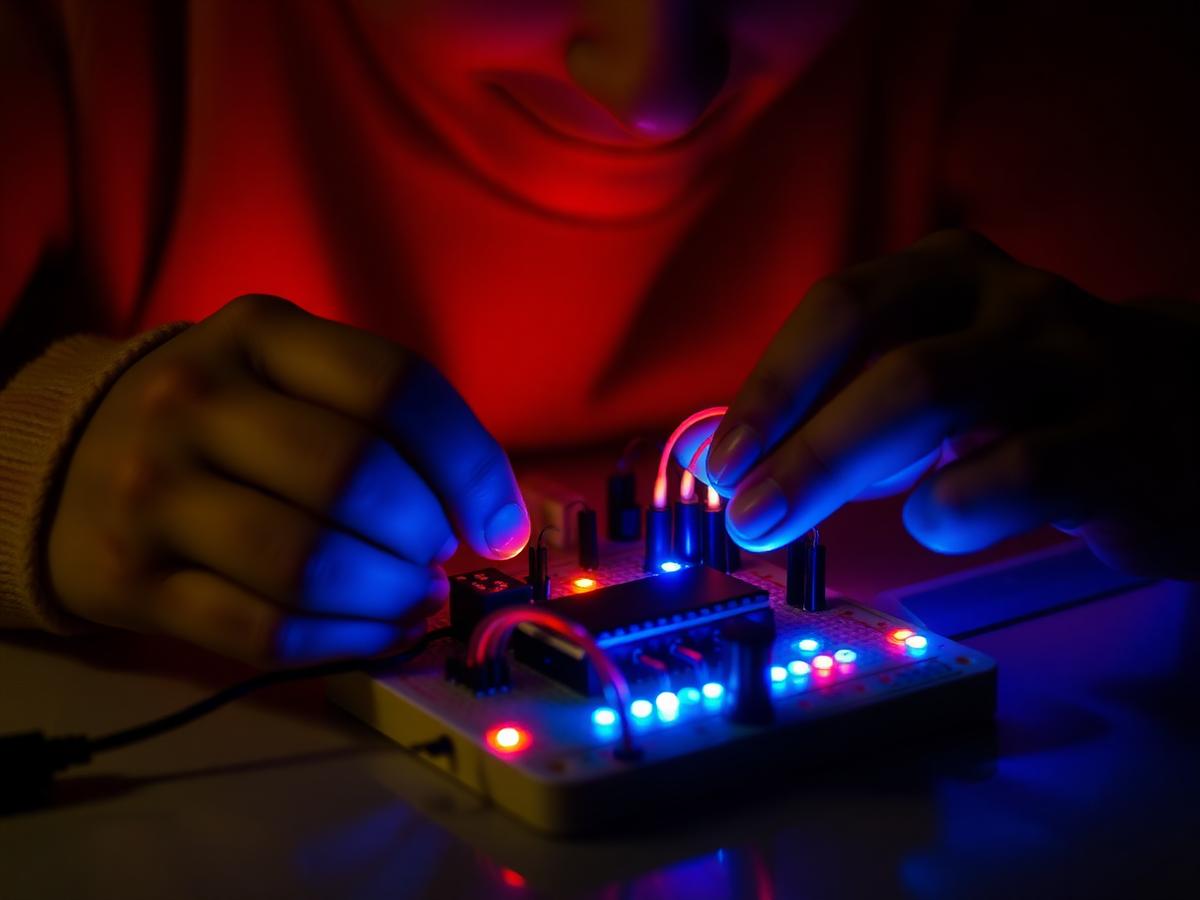
Things students walk out holding
Safety & tools
Everything runs on low-voltage DC — no mains wiring, ever. Soldering starts at Grade 6 with temperature-controlled irons, fume extraction, safety glasses and a one-to-six supervision ratio; younger students use solderless breadboards and alligator clips. Lithium cells are charged in fireproof bags on a monitored bench, and every station has a posted checklist students sign off before powering up.
Age bands offered
Every launch starts with a countdown.
Book a free trial session at the Hyderabad experience center — pick a mission, pick an age band, pick a slot.